
Training for Success: The journey of Athletes

In this English lesson, students develop listening comprehension, grammar awareness, and collaborative skills through two engaging stories about sports. Using the dictogloss technique, learners listen to narratives about training and competitions, take notes with visual support, and reconstruct the texts from memory. The lesson focuses on present perfect progressive and past perfect progressive, helping students notice and use forms such as have/has been practicing and had been training in context. Through pair or group work, learners practice accuracy, recall, and teamwork while improving strategies for active listening. By comparing their reconstructions with the original texts, students enhance self-correction skills and gain confidence in describing ongoing and past activities in English.
Music
In this English lesson, students develop vocabulary related to music through the use of flashcards and interactive group activities. The lesson focuses on recognizing and naming musical instruments, as well as using related verbs and expressions in context. By combining visual input with auditory modeling and repetition, learners strengthen word recognition, pronunciation, and memory retention. Through guided guessing, pair and group work, and a team-based flashcard game, students actively engage with the target language in a fun and communicative way. The lesson promotes visual learning, collaboration, and intercultural awareness by encouraging students to share musical terms from their own languages. It fosters motivation, confidence, and autonomous vocabulary learning through meaningful and playful interaction.
My Family is Mine

In this English lesson, students develop grammar awareness, comprehension, and communicative skills through structured activities focused on possessive determiners and possessive pronouns. Following the Processing Instruction approach, learners are guided to notice the different forms and functions of possessive determiners and pronouns, as well as their agreement with the noun or context. Through referential and affective activities, students read, match, and choose appropriate forms, and engage in personalized discussions, reinforcing accurate use in meaningful contexts. Pair and group work encourage active engagement, peer correction, self-monitoring, and confidence in expressing ownership and relationships between people and objects.
What We Do (by) Ourselves

In this English lesson, students develop grammar awareness, comprehension, and collaborative skills through structured activities focused on reflexive pronouns. Following the Processing Instruction approach, learners are guided to notice the grammatical forms and their agreement with the subject, activating strategies that help convert input into intake. Through referential and affective activities, students read, match, perform, and discuss sentences, reinforcing accurate use of reflexive pronouns in meaningful contexts. Pair and group work promote active engagement, self-monitoring, and confidence in expressing actions performed by or for oneself.
Who Does What
In this English lesson, students develop grammar awareness, comprehension, and communicative skills through structured activities focused on subject-verb agreement. Following the Processing Instruction approach, learners are guided to notice the agreement between subjects and verbs, including the singular use of indefinite pronouns (everybody, nobody, someone, etc.), and to identify grammatical and ungrammatical forms. Through referential and affective activities, students listen, read, complete gaps, match subjects with verbs, and evaluate sentence correctness, while also engaging in discussions about their personal experiences and opinions. Pair and group work promote active engagement, peer correction, self-monitoring, and confidence in accurately using subject-verb agreement in meaningful and personalized contexts.
Yesterday and Tomorrow

In this English lesson, students develop grammar awareness, comprehension, and communicative skills through structured activities focused on Simple Past and Simple Future Tenses. Following the Processing Instruction approach, learners are guided to notice the differences in form and meaning, including how different verb forms indicate actions in the past, present, or future. Through referential and affective activities, students read, listen, categorize verbs according to time, and discuss their own routines and plans, while also comparing answers with classmates. Pair and group work promote active engagement, peer correction, self-monitoring, and confidence in accurately expressing events that have occurred or will occur, reinforcing meaningful understanding of English tense usage.
Musical Instruments

In this English lesson, students explore vocabulary related to musical instruments through engaging auditory and interactive activities. Using sound clips, flashcards, pantomime, and memory games, students learn to recognize, pronounce, and recall new words while connecting English vocabulary with their L1. They practice language through listening, speaking, and cooperative tasks, strengthening both comprehension and communication skills. The lesson fosters creativity, teamwork, and active participation, while encouraging curiosity about music and confidence in using English in real-life contexts.
Professions

In this English lesson, students explore vocabulary related to professions through visual, written, and collaborative activities. Using flashcards, group discussions, and the Frayer Model, students learn to define, describe, and categorize different professions while connecting English vocabulary with their L1. They practice language through speaking, writing, and presentation tasks, strengthening comprehension and communication skills. The lesson promotes critical thinking, teamwork, and active participation, while encouraging students to reflect on future aspirations and develop confidence in using English to describe real-world concepts.
Stories and Fables
In this English lesson, students develop vocabulary inference skills through the use of contextual cues. Using authentic and adapted texts, learners explore how to guess the meanings of unfamiliar words by identifying definitions, examples, synonyms, and antonyms in context. Through teacher modeling, guided pair work, and independent practice, students apply a four-step strategy to interpret new vocabulary. The lesson promotes metacognitive awareness, reading comprehension, and autonomy in language learning. It fosters collaboration, critical thinking, and confidence in understanding texts without relying solely on dictionaries.
Trips

In this English lesson, students strengthen their listening comprehension, grammar awareness, and collaborative skills through two engaging texts about travel experiences. Using the running dictation technique, learners listen to short narratives, note key information, and reconstruct the texts from memory. This activity focuses on Simple Past and Simple Future Tenses, helping students notice and apply correct verb forms in context. Through group or pair work, learners practice accuracy, recall, and teamwork while developing strategies for active listening and language retention. By comparing their reconstructed versions with the original texts, students enhance self-correction skills, expand vocabulary related to travel and leisure activities, and build confidence in using English to describe past experiences and future plans.
Actions in Time
In this English lesson, students develop grammar awareness, comprehension, and communicative skills through structured activities focused on present perfect progressive and past perfect progressive. Following the Processing Instruction approach, learners are guided to notice the differences in form and meaning, including whether an action is ongoing or completed, and how duration is expressed through the use of have/had + been + -ing. Through referential and affective activities, students listen, read, complete multiple-choice tasks, and evaluate statements, while also engaging in discussions about general knowledge and personal experiences. Pair and group work promote active engagement, peer correction, self-monitoring, and confidence in accurately expressing actions with the appropriate progressive tense and duration.
From Clicks to Motion
In this English lesson, students develop grammar awareness, comprehension, and communicative skills through structured activities focused on past perfective and imperfective aspect in main clauses. Following the Processing Instruction approach, learners are guided to notice the difference between simple past and past progressive forms, including their habitual, completed, or ongoing meanings, and to distinguish between snapshot (perfective) and video (imperfective) interpretations of events. Through referential and affective activities, students read sentences, match them to images, evaluate aspectual meanings, and discuss their personal experiences, reinforcing accurate understanding of aspect in meaningful contexts. Pair and group work promote active engagement, peer correction, self-monitoring, and confidence in expressing past events with the appropriate aspect.
Professions
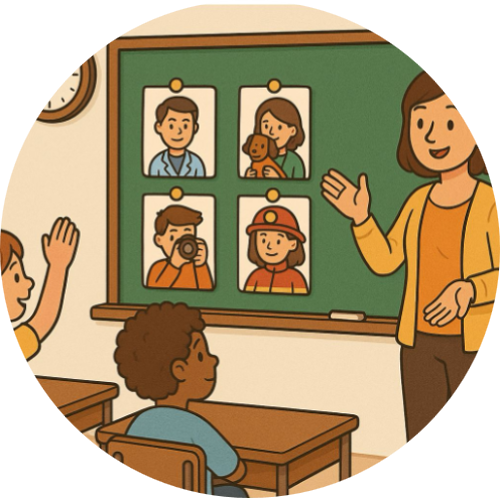
In this lesson, learners are introduced to vocabulary about professions using visual flashcards. The teacher shows flashcards depicting various actions and models pronunciation. Learners engage in several enjoyable activities such as matching activities, pairing images with words or short phrases, which help them enhance their vocabulary and communicative skills.
Professions

In this English lesson, students develop vocabulary through the use of pantomime and interactive group activities. Centered on the theme of professions, the lesson encourages learners to recognize, name, and act out different jobs using body language, gestures, and facial expressions. By integrating visual aids, movement, and auditory repetition, students enhance their word recognition, pronunciation, and memory in a dynamic, multisensory environment. Through teacher modeling, guided miming, and cooperative games such as “Simon Says,” learners actively engage with the target language in a playful and communicative context. The lesson fosters kinesthetic learning, creativity, and collaboration while promoting confidence and intercultural awareness. It helps students internalize new vocabulary through meaningful, embodied interaction, making learning both effective and enjoyable.
Trips

In this English lesson, students explore vocabulary related to travel and destinations while learning to recognize and use different verb tenses. Through engaging activities such as picture-based discussions, listening exercises, and a running dictation game, students connect language learning with real-world contexts. They compare how time and verb forms are expressed in English and in their L1, enhancing their grammatical awareness and multilingual competence. The lesson fosters collaboration, active participation, and curiosity about different places and cultures.
Sharing Memories: A Picnic and a Beach Day

In this English lesson, students strengthen their listening comprehension, grammar awareness, and collaborative skills through two engaging stories about different outdoor activities. Using the dictogloss technique, learners listen to short narratives describing family outings and recreational experiences, take notes with the help of visual aids, and reconstruct the texts from memory. The lesson focuses on possessive determiners and possessive pronouns, helping students notice and apply forms such as my, your, his, her, our, theirs, mine, and ours in meaningful contexts. Through group or pair work, learners practice accuracy, recall, and teamwork while developing strategies for active listening and language retention. By comparing their reconstructed versions with the original texts, students enhance self-correction skills, expand vocabulary related to personal belongings and shared items, and gain confidence in using English to describe ownership and relationships in everyday situations.
A Day at Work: Mary’s Café and Ms. Smith’s Classroom
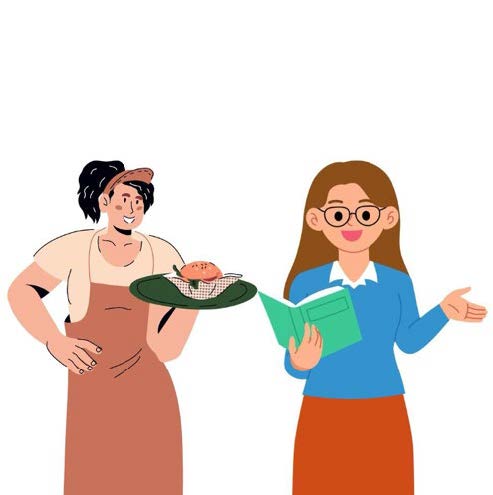
In this English lesson, students strengthen their listening comprehension, grammar awareness, and collaborative skills through two engaging stories about different professions. Using the dictogloss technique, learners listen to short narratives describing daily work routines, take notes with the help of visual aids, and reconstruct the texts from memory. This activity focuses on subject–verb agreement, helping students notice and apply correct verb forms in context. Through group or pair work, they practice accuracy, recall, and teamwork while developing strategies for active listening and language retention. By comparing their reconstructed versions with the original texts, learners enhance their self-correction skills, expand vocabulary related to jobs and workplaces, and build confidence in using English to describe people’s occupations and everyday professional activities.
Books and Browsing: A look inside the Library and Bookstore

In this English lesson, students develop listening comprehension, grammar awareness, and collaborative skills through two stories about a library and a bookstore. Using the dictogloss technique, they listen to short narratives, take notes with visual aids, and reconstruct the texts. The lesson focuses on passive sentences and non-active voice, helping students notice and use constructions like is borrowed, is given, and are arranged. Through pair or group work, learners practice accuracy, recall, and teamwork while gaining confidence in describing events where the subject receives the action.
 English (UK)
  Ελληνικά
  Polski
  Deutsch
  Français