
Renaissance Revealed

In this lesson, learners are introduced to common daily routine expressions using visual flashcards. The teacher shows flashcards depicting various actions and models pronunciation. Learners engage in several enjoyable activities such as matching activities, pairing images with words or short phrases, which help them enhance their vocabulary and communicative skills.
Πάμε Σινεμά!

Το μάθημα στοχεύει να βοηθήσει τους μαθητές/τις μαθήτριες να εξοικειωθούν με την παιδαγωγική διαγλωσσικότητα δηλαδή τη συμπερίληψη της πρώτης τους γλώσσας στη μαθησιακή διαδικασία. Έτσι, μέσω της σύγκρισης πρώτης και δεύτερης γλώσσας αναμένεται να βελτιώσουν τη μορφολογική τους επίγνωσης και να αποκτήσουν γλωσσικές και μεταγλωσσικές δεξιότητες.
Around the Streets

In this English lesson, students explore vocabulary related to street elements and everyday surroundings through visual, written, and interactive activities. Using flashcards, discussions, and an adapted version of the Frayer Model, students learn to define, illustrate, and use new words in context while connecting English vocabulary with their L1. They practice language through speaking, writing, and peer-sharing tasks, strengthening both comprehension and communication skills. The lesson promotes observation, collaboration, and active participation, while fostering awareness of their environment and confidence in using English for real-life situations.
Why Can’t You Fall Asleep?

In this English lesson, students develop vocabulary inference skills through the use of contextual cues. Using authentic and adapted texts, learners explore how to guess the meanings of unfamiliar words by identifying definitions, examples, synonyms, and antonyms in context. Through teacher modeling, guided pair work, and independent practice, students apply a four-step strategy to interpret new vocabulary. The lesson promotes metacognitive awareness, reading comprehension, and autonomy in language learning. It fosters collaboration, critical thinking, and confidence in understanding texts without relying solely on dictionaries.
A Day at Work: Mary’s Café and Ms. Smith’s Classroom

In this English lesson, students strengthen their listening comprehension, grammar awareness, and collaborative skills through two engaging texts about professions and daily work routines. Using the running dictation technique, learners listen to short narratives, note key information, and reconstruct the texts from memory. This activity focuses on subject–verb agreement, helping students notice and apply correct verb forms in context, including agreement with singular and plural subjects. Through group or pair work, learners practice accuracy, recall, and teamwork while developing strategies for active listening and language retention. By comparing their reconstructed versions with the original texts, students enhance self-correction skills, expand vocabulary related to jobs and workplaces, and build confidence in using English to describe daily professional activities.
The Power of Expression: How Music and Dance Connect Us
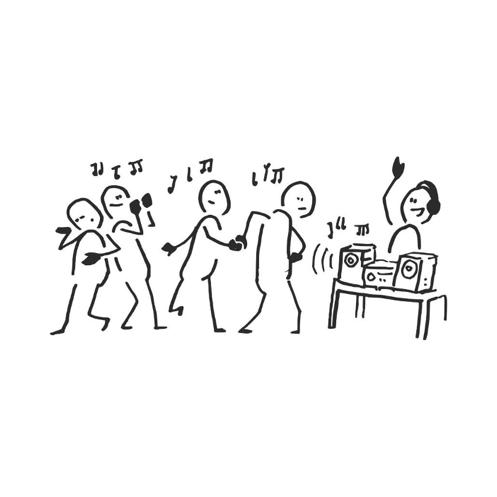
In this English lesson, students strengthen their listening comprehension, grammar awareness, and collaborative skills through two engaging texts about music and dance. Using the running dictation technique, learners listen to short narratives, note key information, and reconstruct the texts from memory. This activity focuses on complementary clauses and indirect question clauses, helping students recognize and use embedded questions accurately within sentences. Through group or pair work, learners practice accuracy, recall, and teamwork while developing strategies for active listening and language retention. By comparing their reconstructed versions with the original texts, students enhance self-correction skills, expand vocabulary related to music, performance, and artistic expression, and build confidence in using English to express curiosity, report questions, and communicate ideas about creativity and culture.
Who Does What
In this English lesson, students develop grammar awareness, comprehension, and communicative skills through structured activities focused on subject-verb agreement. Following the Processing Instruction approach, learners are guided to notice the agreement between subjects and verbs, including the singular use of indefinite pronouns (everybody, nobody, someone, etc.), and to identify grammatical and ungrammatical forms. Through referential and affective activities, students listen, read, complete gaps, match subjects with verbs, and evaluate sentence correctness, while also engaging in discussions about their personal experiences and opinions. Pair and group work promote active engagement, peer correction, self-monitoring, and confidence in accurately using subject-verb agreement in meaningful and personalized contexts.
Musical Instruments

In this English lesson, students explore vocabulary related to musical instruments through engaging auditory and interactive activities. Using sound clips, flashcards, pantomime, and memory games, students learn to recognize, pronounce, and recall new words while connecting English vocabulary with their L1. They practice language through listening, speaking, and cooperative tasks, strengthening both comprehension and communication skills. The lesson fosters creativity, teamwork, and active participation, while encouraging curiosity about music and confidence in using English in real-life contexts.
A Day at Work: Mary’s Café and Ms. Smith’s Classroom

In this English lesson, students strengthen their listening comprehension, grammar awareness, and collaborative skills through two engaging stories about different professions. Using the dictogloss technique, learners listen to short narratives describing daily work routines, take notes with the help of visual aids, and reconstruct the texts from memory. This activity focuses on subject–verb agreement, helping students notice and apply correct verb forms in context. Through group or pair work, they practice accuracy, recall, and teamwork while developing strategies for active listening and language retention. By comparing their reconstructed versions with the original texts, learners enhance their self-correction skills, expand vocabulary related to jobs and workplaces, and build confidence in using English to describe people’s occupations and everyday professional activities.
The Power of Expression: How Music and Dance Connect Us
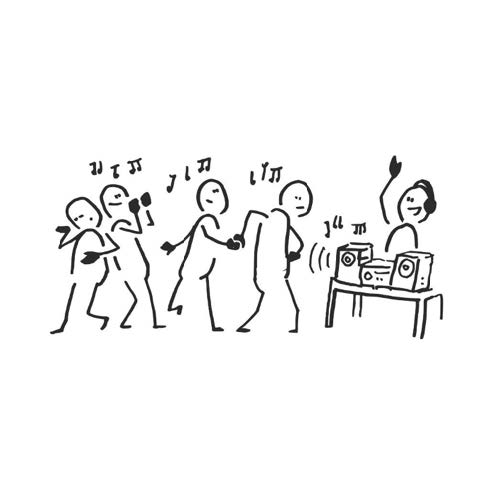
In this English lesson, students develop listening comprehension, grammar awareness, and collaborative skills through two engaging stories about music and dance. Using the dictogloss technique, learners listen to short narratives, take notes with the support of visual aids, and reconstruct the texts from memory. The lesson focuses on complementary clauses and indirect question clauses, helping students notice and use constructions such as wonder what…, ask how…, and explain why… in meaningful contexts. Through pair or group work, learners practice accuracy, recall, and teamwork while gaining confidence in describing events, thoughts, and inquiries in English.
 English (UK)
  Ελληνικά
  Polski
  Deutsch
  Français