
Who is doing what?
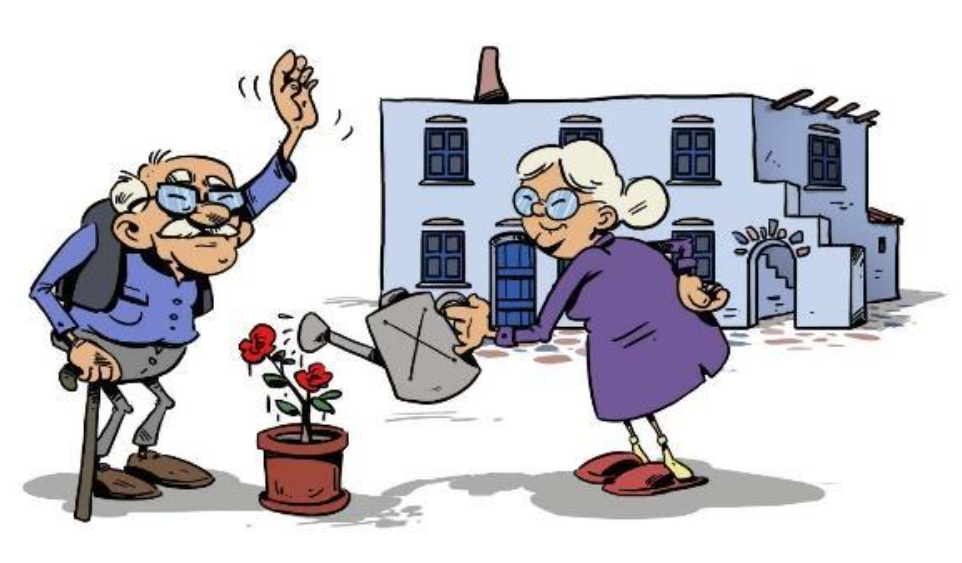
The lesson aims to help learners distinguish and correctly use the active and passive voice through processing instruction. Learners are guided to focus on form and meaning by comprehending the input, rather than producing structures immediately. Activities will direct learners’ attention to how the subject, verb, and object change roles between active and passive sentences, promoting accurate comprehension and use.
Exploring Clothing
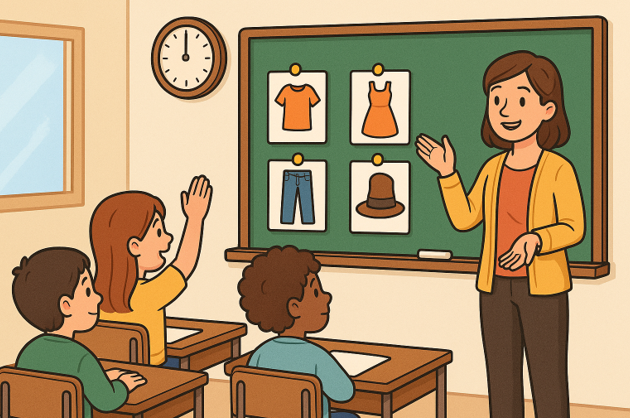
In this lesson, learners explore clothing vocabulary using a multilingual approach. Key terms are introduced in the target language and learners are encouraged to share equivalents from their home languages and any other languages they know. Through several inclusive and enjoyable activities, learners develop receptive and expressive vocabulary on clothing, while noticing similarities and differences across languages.
Daily Routines
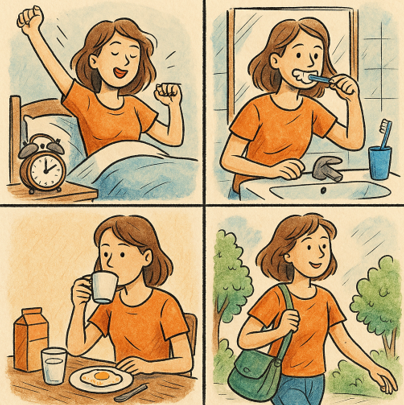
In this lesson, learners are introduced to common daily routine expressions using visual flashcards. The teacher shows flashcards depicting various actions and models pronunciation. Learners engage in several enjoyable activities such as matching activities, pairing images with words or short phrases, which help them enhance their vocabulary and communicative skills.
Travel Time
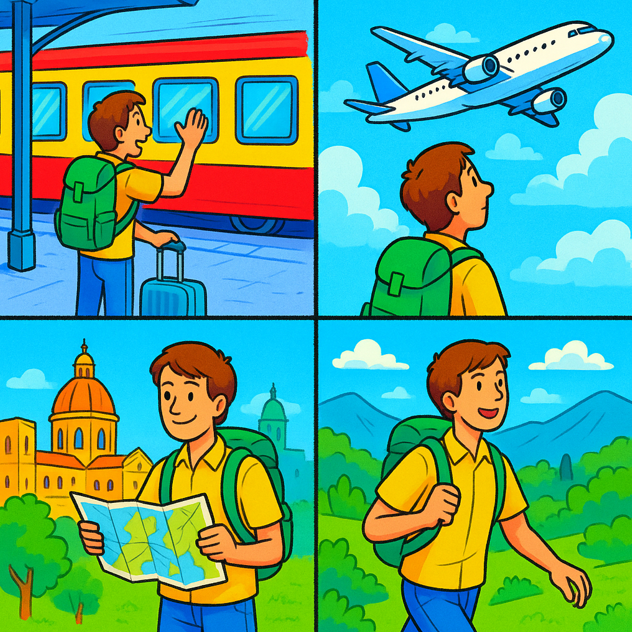
This lesson uses a Dictogloss activity, a collaborative game, where learners work together to reconstruct a short text after listening to it. Through this fun and interactive process, learners practice producing language while focusing on the use of the simple past and simple future tenses, helping them understand how verb forms connect to their meanings.
Στον κήπο του παππού
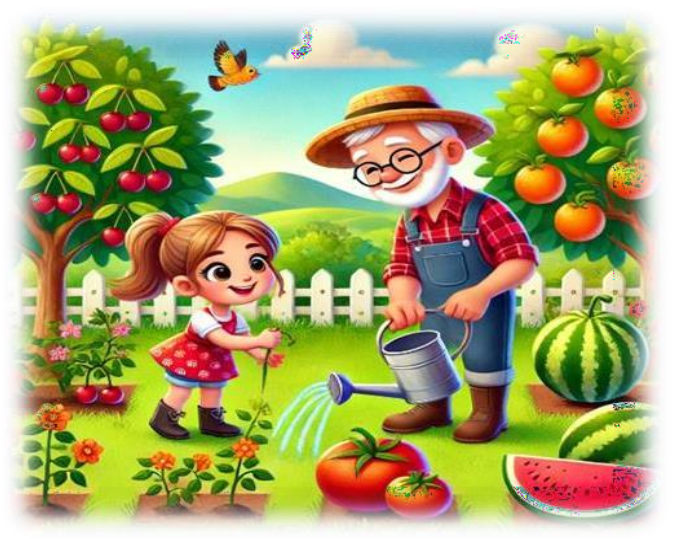
Το μάθημα στοχεύει να βοηθήσει τους μαθητές/τις μαθήτριες να εξοικειωθούν με την παιδαγωγική διαγλωσσικότητα δηλαδή τη συμπερίληψη της πρώτης τους γλώσσας στη μαθησιακή διαδικασία. Έτσι, μέσω της σύγκρισης πρώτης και δεύτερης γλώσσας αναμένεται να βελτιώσουν τη μορφολογική τους επίγνωσης και να αποκτήσουν γλωσσικές και μεταγλωσσικές δεξιότητες.
Πάμε Σινεμά!
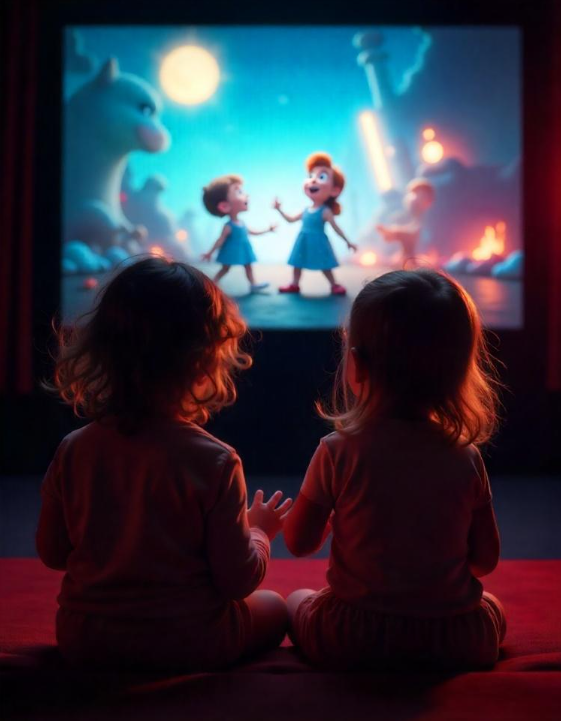
Το μάθημα στοχεύει να βοηθήσει τους μαθητές/τις μαθήτριες να εξοικειωθούν με την παιδαγωγική διαγλωσσικότητα δηλαδή τη συμπερίληψη της πρώτης τους γλώσσας στη μαθησιακή διαδικασία. Έτσι, μέσω της σύγκρισης πρώτης και δεύτερης γλώσσας αναμένεται να βελτιώσουν τη μορφολογική τους επίγνωσης και να αποκτήσουν γλωσσικές και μεταγλωσσικές δεξιότητες.
Η κούκλα ξεσκονίζεται από ένα ξωτικό
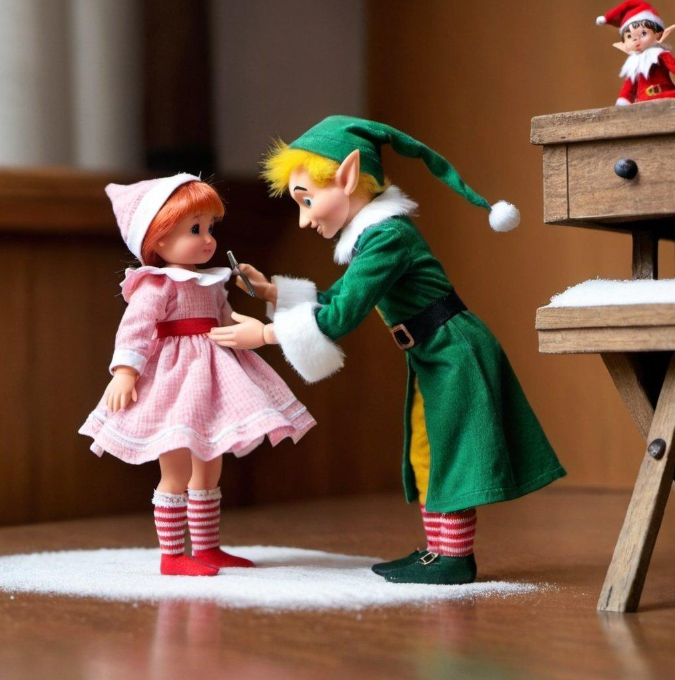
Το μάθημα στοχεύει να βοηθήσει τους μαθητές/τις μαθήτριες να διακρίνουν και να χρησιμοποιούν σωστά την ενεργητική και την παθητική φωνή μέσω της Διδασκαλίας με βάση τη Γλωσσική Επεξεργασία. Οι μαθητ(ρι)ές καθοδηγούνται ώστε να εστιάσουν στη μορφή και στο νόημα κατανοώντας το γλωσσικό εισαγόμενο (input), αντί να παράγουν αμέσως τη γλωσσική δομή-στόχο. Οι δραστηριότητες θα κατευθύνουν την προσοχή των μαθητών στο πώς το υποκείμενο, το ρήμα και το αντικείμενο αλλάζουν θεματικούς ρόλους ανάμεσα σε ενεργητικές και παθητικές προτάσεις, προάγοντας την ορθή κατανόηση και χρήση.
Wild Animals
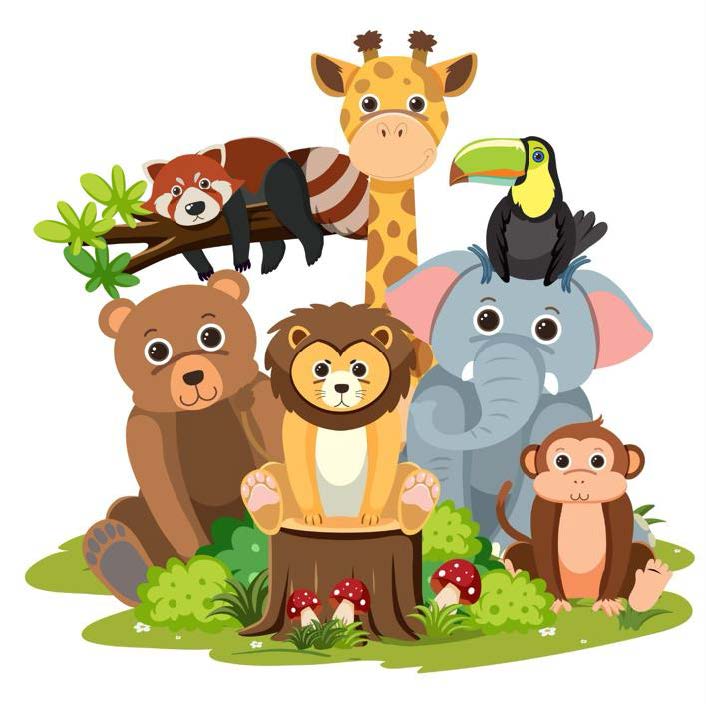
In this English lesson, students explore vocabulary related to wild animals through engaging visual and interactive activities. Using flashcards, guessing games, and Bingo, students practice pronunciation, recognition, and spelling of new words. They connect English vocabulary with their L1, enhancing multilingual awareness and understanding. The lesson encourages collaboration, active participation, and curiosity about animals, while fostering confidence in using English for everyday topics.
Sharing Memories: A Picnic and a Beach Day

In this English lesson, students strengthen their listening comprehension, grammar awareness, and collaborative skills through two engaging texts about outdoor activities and family routines. Using the running dictation technique, learners listen to short narratives, note key information, and reconstruct the texts from memory. This activity focuses on possessive determiners and possessive pronouns, helping students notice and apply correct forms in context, including singular, plural, and agreement with the subject. Through group or pair work, learners practice accuracy, recall, and teamwork while developing strategies for active listening and language retention. By comparing their reconstructed versions with the original texts, students enhance self-correction skills, expand vocabulary related to leisure and outdoor activities, and build confidence in using English to describe ownership and shared experiences.
Music
In this English lesson, students develop vocabulary related to music through the use of flashcards and interactive group activities. The lesson focuses on recognizing and naming musical instruments, as well as using related verbs and expressions in context. By combining visual input with auditory modeling and repetition, learners strengthen word recognition, pronunciation, and memory retention. Through guided guessing, pair and group work, and a team-based flashcard game, students actively engage with the target language in a fun and communicative way. The lesson promotes visual learning, collaboration, and intercultural awareness by encouraging students to share musical terms from their own languages. It fosters motivation, confidence, and autonomous vocabulary learning through meaningful and playful interaction.
My Family is Mine

In this English lesson, students develop grammar awareness, comprehension, and communicative skills through structured activities focused on possessive determiners and possessive pronouns. Following the Processing Instruction approach, learners are guided to notice the different forms and functions of possessive determiners and pronouns, as well as their agreement with the noun or context. Through referential and affective activities, students read, match, and choose appropriate forms, and engage in personalized discussions, reinforcing accurate use in meaningful contexts. Pair and group work encourage active engagement, peer correction, self-monitoring, and confidence in expressing ownership and relationships between people and objects.
Yesterday and Tomorrow

In this English lesson, students develop grammar awareness, comprehension, and communicative skills through structured activities focused on Simple Past and Simple Future Tenses. Following the Processing Instruction approach, learners are guided to notice the differences in form and meaning, including how different verb forms indicate actions in the past, present, or future. Through referential and affective activities, students read, listen, categorize verbs according to time, and discuss their own routines and plans, while also comparing answers with classmates. Pair and group work promote active engagement, peer correction, self-monitoring, and confidence in accurately expressing events that have occurred or will occur, reinforcing meaningful understanding of English tense usage.
Trips

In this English lesson, students strengthen their listening comprehension, grammar awareness, and collaborative skills through two engaging texts about travel experiences. Using the running dictation technique, learners listen to short narratives, note key information, and reconstruct the texts from memory. This activity focuses on Simple Past and Simple Future Tenses, helping students notice and apply correct verb forms in context. Through group or pair work, learners practice accuracy, recall, and teamwork while developing strategies for active listening and language retention. By comparing their reconstructed versions with the original texts, students enhance self-correction skills, expand vocabulary related to travel and leisure activities, and build confidence in using English to describe past experiences and future plans.
Professions
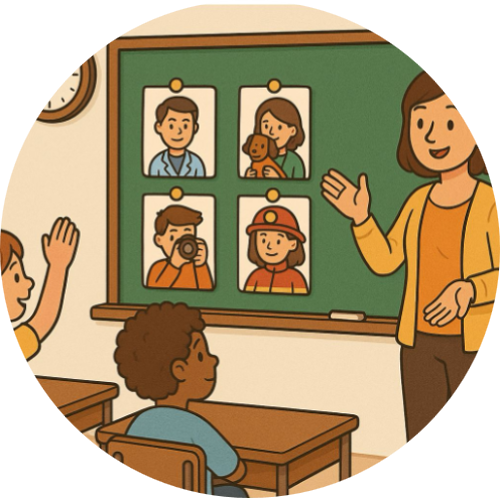
In this lesson, learners are introduced to vocabulary about professions using visual flashcards. The teacher shows flashcards depicting various actions and models pronunciation. Learners engage in several enjoyable activities such as matching activities, pairing images with words or short phrases, which help them enhance their vocabulary and communicative skills.
Professions

In this English lesson, students develop vocabulary through the use of pantomime and interactive group activities. Centered on the theme of professions, the lesson encourages learners to recognize, name, and act out different jobs using body language, gestures, and facial expressions. By integrating visual aids, movement, and auditory repetition, students enhance their word recognition, pronunciation, and memory in a dynamic, multisensory environment. Through teacher modeling, guided miming, and cooperative games such as “Simon Says,” learners actively engage with the target language in a playful and communicative context. The lesson fosters kinesthetic learning, creativity, and collaboration while promoting confidence and intercultural awareness. It helps students internalize new vocabulary through meaningful, embodied interaction, making learning both effective and enjoyable.
Trips

In this English lesson, students explore vocabulary related to travel and destinations while learning to recognize and use different verb tenses. Through engaging activities such as picture-based discussions, listening exercises, and a running dictation game, students connect language learning with real-world contexts. They compare how time and verb forms are expressed in English and in their L1, enhancing their grammatical awareness and multilingual competence. The lesson fosters collaboration, active participation, and curiosity about different places and cultures.
Sharing Memories: A Picnic and a Beach Day

In this English lesson, students strengthen their listening comprehension, grammar awareness, and collaborative skills through two engaging stories about different outdoor activities. Using the dictogloss technique, learners listen to short narratives describing family outings and recreational experiences, take notes with the help of visual aids, and reconstruct the texts from memory. The lesson focuses on possessive determiners and possessive pronouns, helping students notice and apply forms such as my, your, his, her, our, theirs, mine, and ours in meaningful contexts. Through group or pair work, learners practice accuracy, recall, and teamwork while developing strategies for active listening and language retention. By comparing their reconstructed versions with the original texts, students enhance self-correction skills, expand vocabulary related to personal belongings and shared items, and gain confidence in using English to describe ownership and relationships in everyday situations.
 English (UK)
  Ελληνικά
  Polski
  Deutsch
  Français