
Everyday Routines
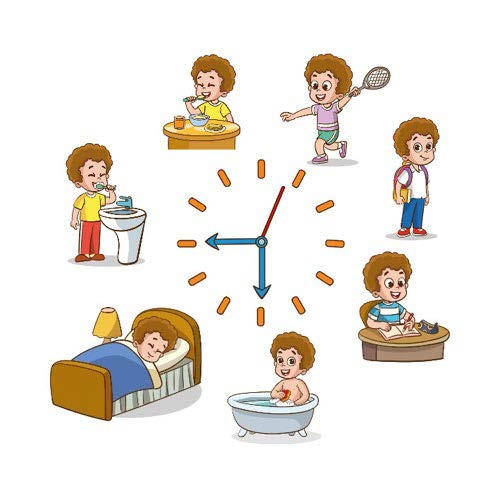
In this English lesson, students strengthen their listening comprehension, grammar awareness, and collaborative skills through two engaging texts about daily routines. Using the running dictation technique, learners listen to short narratives, note key information, and reconstruct the texts from memory. This activity focuses on reflexive pronouns, helping students notice and apply correct pronoun forms in context, including singular, plural, and agreement with the subject. Through group or pair work, learners practice accuracy, recall, and teamwork while developing strategies for active listening and language retention. By comparing their reconstructed versions with the original texts, students enhance self-correction skills, expand vocabulary related to routines and daily life, and build confidence in using English to describe actions performed independently.
Days of Laughs: From Mall Adventures to Birthday Parties
In this English lesson, students enhance their listening comprehension, grammatical awareness, and collaborative skills through two engaging stories about fun activities. Using the dictogloss technique, learners actively listen to short narratives about leisure and social experiences, take notes with the support of visual aids, and reconstruct the stories from memory. The lesson focuses on the past perfective and imperfective aspect in main clauses, helping students understand how these forms express sequence, duration, and background actions in the past. Through group or pair work, learners practice accuracy, recall, and teamwork while developing strategies for active listening and language retention. By comparing their reconstructed versions with the original texts, students strengthen their self-monitoring and editing skills, deepen their understanding of narrative structure, and build confidence in using English to describe past experiences and events in a coherent and meaningful way.
Langues dans les activités sportives

Dans cette activité les apprenants découvriront des mots spécifiques pour nommer certaines actions sportives. Ils auront également la possibilité de partager certains de ces mots dans d’autres langues
Comparer des nombres (CP)
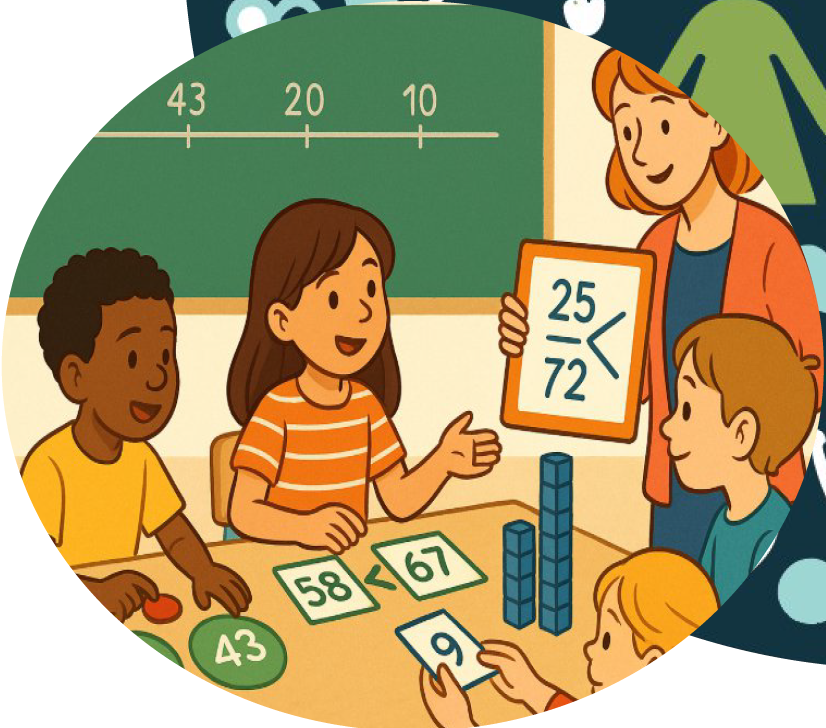
Dans cette leçon, les élèves apprennent à comparer des nombres en jouant au jeu des boîtes. Ils lancent un dé, observent les collections de jetons et appliquent la règle « prendre la boîte où il y a moins de jetons que de points sur le dé ». L’activité permet de comparer des quantités, de justifier ses choix et d’utiliser le langage mathématique de manière simple.
Comment vivent les plantes?
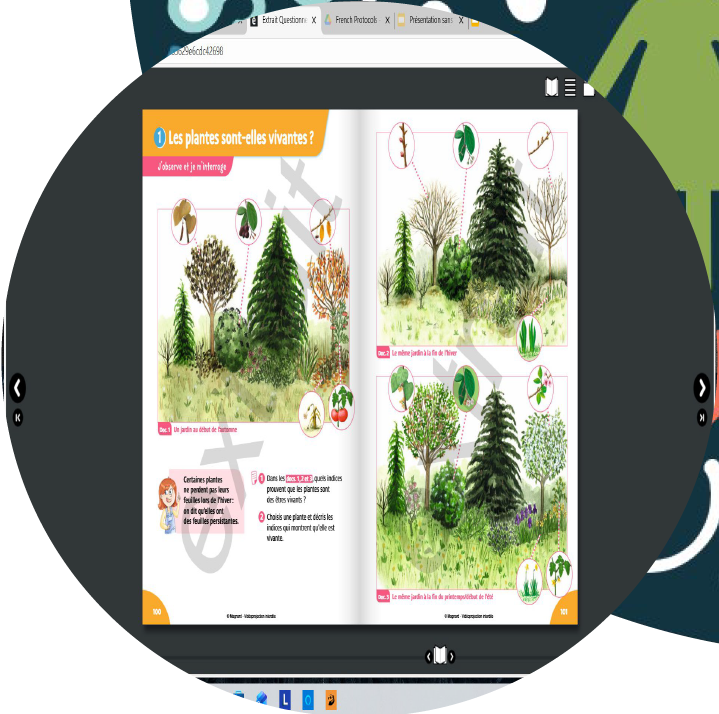
Dans cette séance les élèves vont découvrir les différentes parties d’une plante et comprendre que les plantes sont vivantes. Ils apprendront le lexique et des structures grammaticales (verbes au present) pour décrire une plante.
Sécurité à vélo
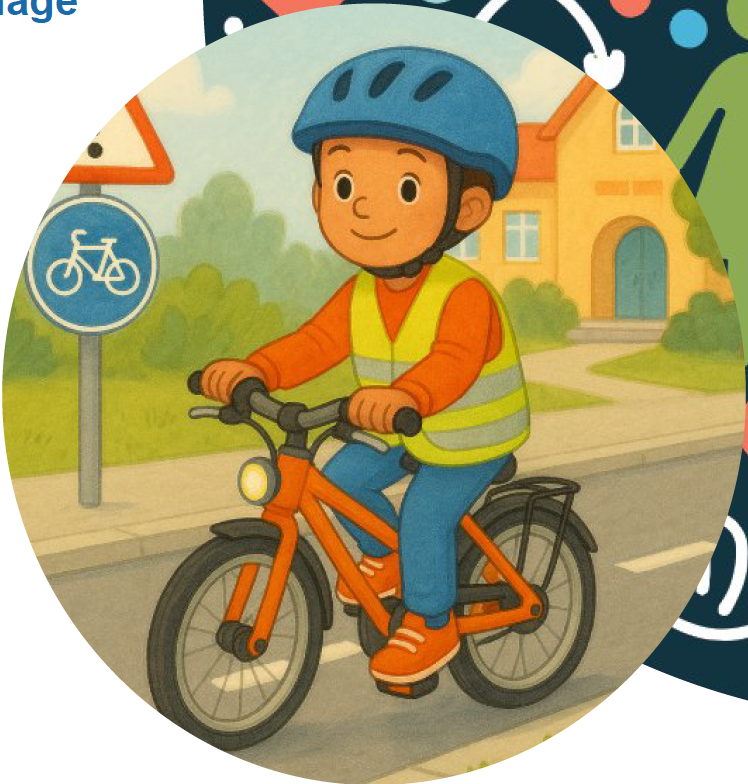
Dans cette activité les élèves vont parler de leur trajet de l’école, et notamment de la sécurité sur ce trajet. Les élèves vont aussi discuter de l’opération “A l’école en vélo” et des règles de écurité (équipements + code de la route).
Homer: “Iliada”

Lekcja realizuje cele kształcenia literackiego i kulturowego, językowego, kształci umiejętność tworzenia wypowiedzi w języku obcym dla ucznia i wskazuje uczniom jak się uczyć
(samokształcenie) w zakresie określonym w podstawie programowej nauczania literatury dla klasy pierwszej liceum ogólnokształcącego.
Σχήματα & Στερεά
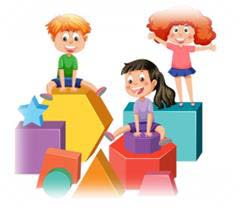
Στην παρούσα ενότητα, που συνδυάζει τη Γλώσσα με τα
Μαθηματικά της Β’ Δημοτικού, οι μαθητές/ήτριες γνωρίζουν τα γεωμετρικά σχήματα και στερεά,
εξασκούνται σε γραμματικά φαινόμενα, όπως ο πληθυντικός αριθμός των ουσιαστικών και εμπλουτίζουν
το λεξιλόγιό τους στα ελληνικά και σε άλλες γλώσσες. Μέσα από ποικίλες βιωματικές και δημιουργικές
δραστηριότητες, αναπτύσσουν γλωσσικές και μαθηματικές δεξιότητες, καλλιεργούν την συνεργασία και
επικοινωνία και συνδέουν τη μάθηση με την
καθημερινή ζωή, τον πολιτισμό και την τέχνη.
Αυλαία και πάμε
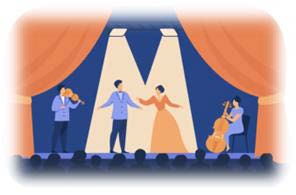
Στην παρούσα ενότητα, που συνδυάζει τη Γλώσσα με τη Θεατρική
Αγωγή της Στ΄ Δημοτικού, οι μαθητές/ήτριες γνωρίζουν τα βασικά στοιχεία που συνθέτουν μια
θεατρική παράσταση, όπως τη σκηνογραφία, την ενδυματολογία, τον φωτισμό και τον
ήχο/μουσική. Μέσα από βιωματικές και δημιουργικές δραστηριότητες, μαθαίνουν πώς κάθε
στοιχείο συμβάλλει στη διαμόρφωση της ατμόσφαιρας και του νοήματος στη σκηνή. Παράλληλα,
εξασκούνται στη χρήση ρημάτων σε -ομαι, στα τοπικά επιρρήματα και εμπλουτίζουν το λεξιλόγιό τους με
θεατρικούς όρους, τόσο στα ελληνικά όσο και σε άλλες γλώσσες που γνωρίζουν. Η ενότητα καλλιεργεί τη
συνεργασία, την προφορική έκφραση, τη δημιουργικότητα και τη διαπολιτισμική συνείδηση, συνδέοντας
τη
γλώσσα με την τέχνη και τη θεατρική εμπειρία.
Zahlen (1-10) und Körperteile
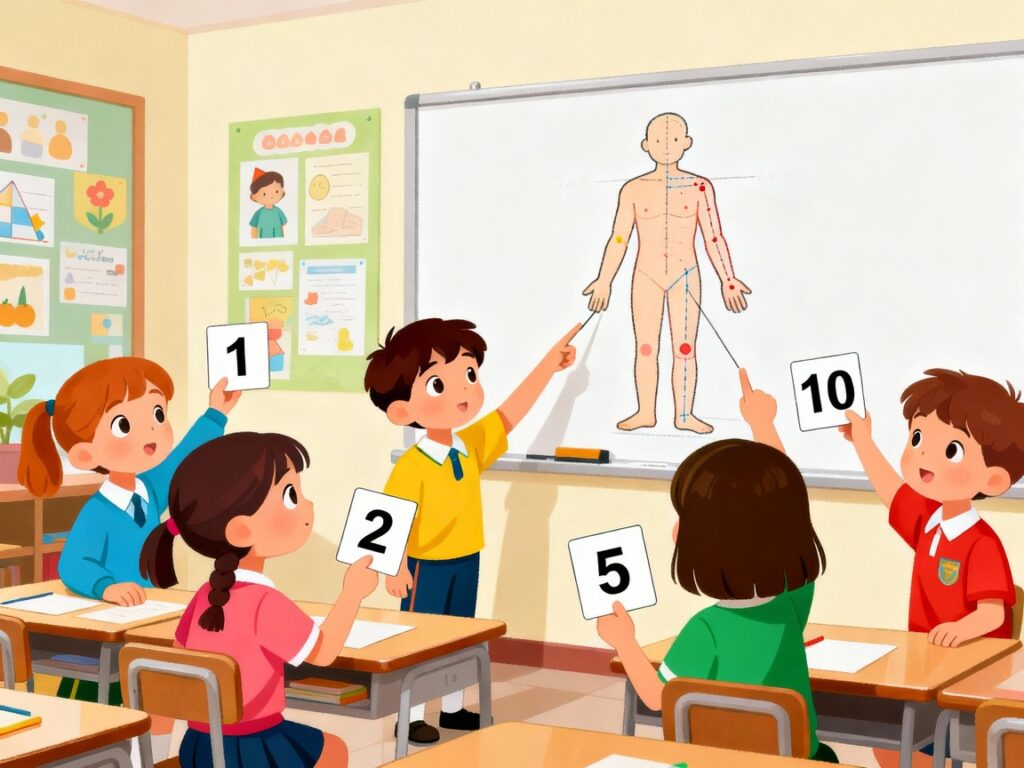
In dieser Unterrichtsstunde lernen die Schülerinnen und Schüler
wichtige Körperteile sowie die Zahlen von 1–10 kennen. Durch
visuelle Impulse (Wortschatzkarten), Bewegung und kooperative
Aktivitäten werden die neuen Begriffe eingeführt, geübt und
gefestigt. Die Lernenden verbinden Zahlen mit Körperteilen und
formulieren Sätze im Akkusativ.
Wir bewegen uns wie Tiere!
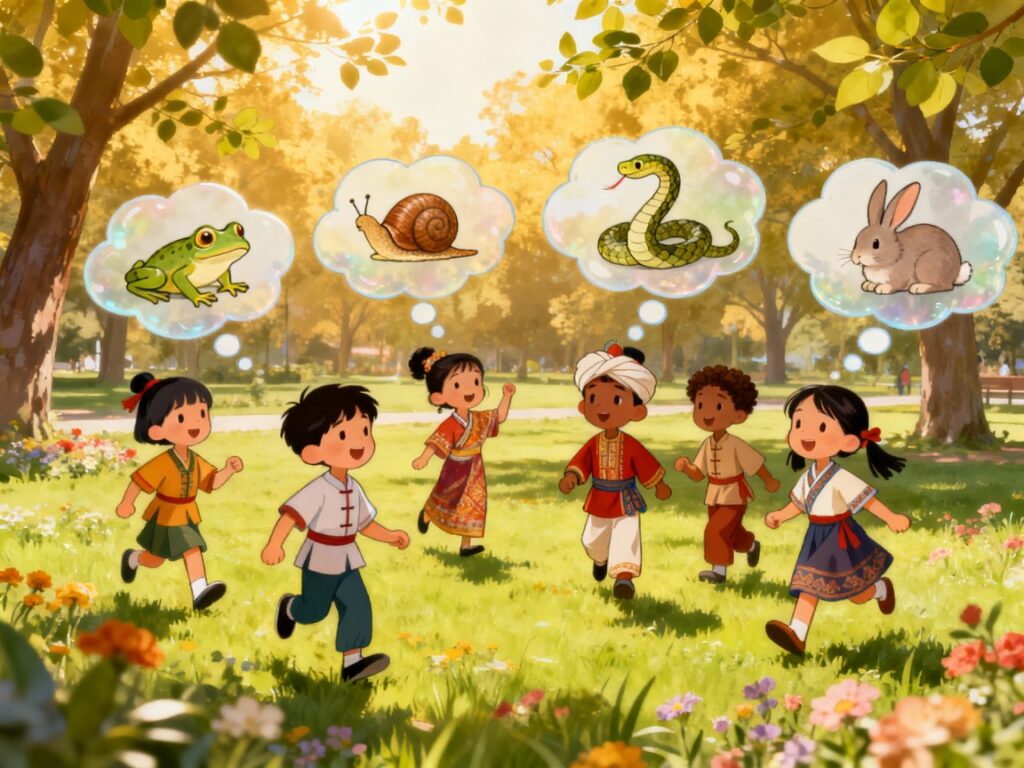
In dieser Stunde lernen die Schülerinnen und Schüler verschiedene
Tiere und deren typische Bewegungen mithilfe von Bildkarten, Gestik
und Bewegung kennen. Durch ein Begrüßungsspiel, ein Bewegungs-
Lied, die Einführung von Satzmustern („Ich bin ein … / Ich …“) sowie
zwei bewegungsreiche Spiele (Tiersafari und Tierstaffel) verknüpfen
die Lernenden Sprache mit körperlicher Aktivität. Die Stunde ist
spielerisch, multisensorisch und stark handlungsorientiert angelegt,
sodass die Schülerinnen und Schüler neue Wörter unmittelbar
erleben, imitieren und im Kontext anwenden können.
Mein Körper
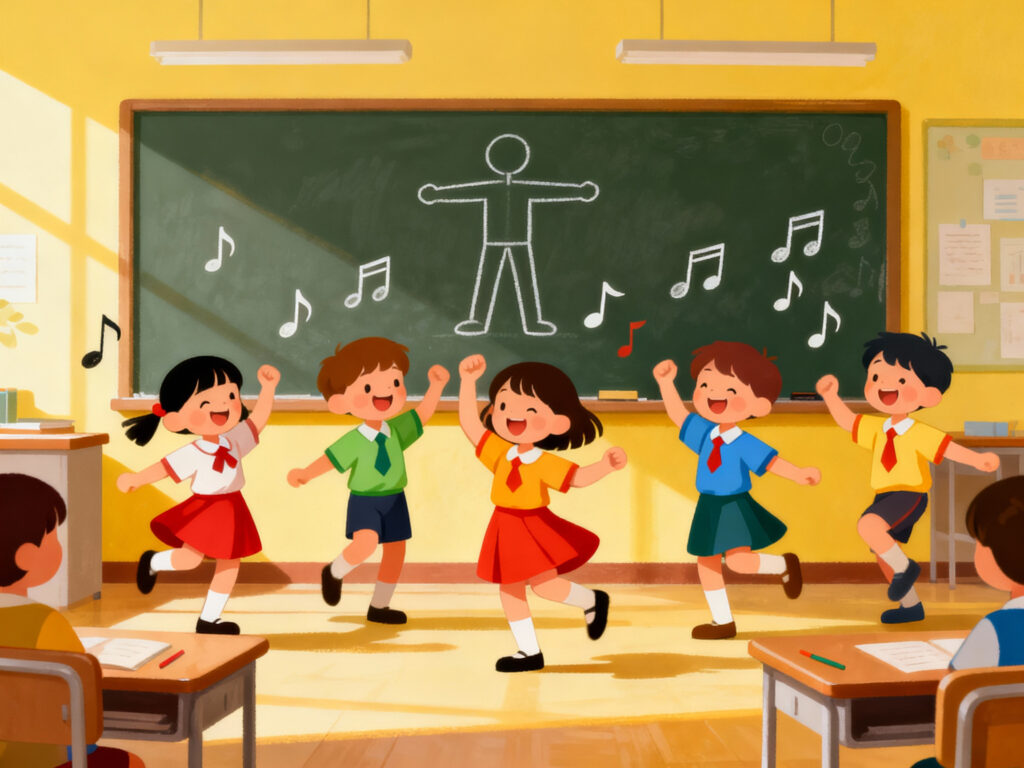
Die Unterrichtsstunde führt die Schülerinnen und Schüler spielerisch
an den Wortschatz zum Thema Körperteile heran. Durch
multisensorische Methoden (zeigen, hören, sprechen, bewegen),
kooperative Arbeitsformen und mehrsprachige Elemente entdecken
die Kinder die Bezeichnungen für Körperteile auf Deutsch und nutzen
dafür mitunter ihre Herkunftssprachen. Der Unterricht verknüpft
Spracherwerb mit Bewegung, Interaktion und kultureller Vielfalt.
Durch Lieder, Spiele und Gruppenarbeit wird der neue Wortschatz
gefestigt und aktiv angewendet.
 English (UK)
  Ελληνικά
  Polski
  Deutsch
  Français