
A Day at Work: Mary’s Café and Ms. Smith’s Classroom
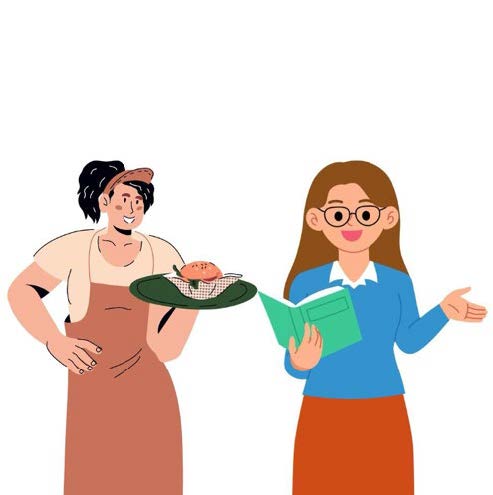
In this English lesson, students strengthen their listening comprehension, grammar awareness, and collaborative skills through two engaging stories about different professions. Using the dictogloss technique, learners listen to short narratives describing daily work routines, take notes with the help of visual aids, and reconstruct the texts from memory. This activity focuses on subject–verb agreement, helping students notice and apply correct verb forms in context. Through group or pair work, they practice accuracy, recall, and teamwork while developing strategies for active listening and language retention. By comparing their reconstructed versions with the original texts, learners enhance their self-correction skills, expand vocabulary related to jobs and workplaces, and build confidence in using English to describe people’s occupations and everyday professional activities.
Everyday Routines
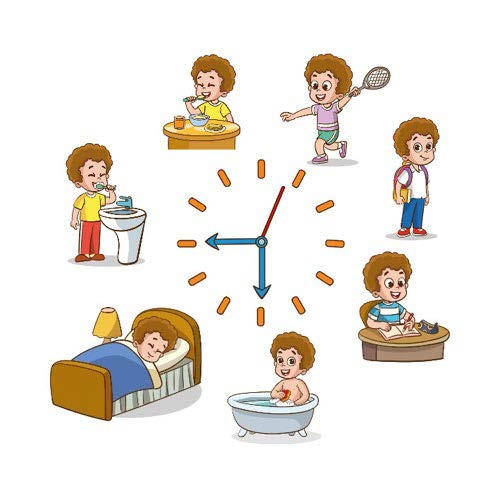
In this English lesson, students strengthen their listening comprehension, grammar awareness, and collaborative skills through two engaging texts about daily routines. Using the running dictation technique, learners listen to short narratives, note key information, and reconstruct the texts from memory. This activity focuses on reflexive pronouns, helping students notice and apply correct pronoun forms in context, including singular, plural, and agreement with the subject. Through group or pair work, learners practice accuracy, recall, and teamwork while developing strategies for active listening and language retention. By comparing their reconstructed versions with the original texts, students enhance self-correction skills, expand vocabulary related to routines and daily life, and build confidence in using English to describe actions performed independently.
Days of Laughs: From Mall Adventures to Birthday Parties

In this English lesson, students enhance their listening comprehension, grammatical awareness, and collaborative skills through two engaging stories about fun activities. Using the dictogloss technique, learners actively listen to short narratives about leisure and social experiences, take notes with the support of visual aids, and reconstruct the stories from memory. The lesson focuses on the past perfective and imperfective aspect in main clauses, helping students understand how these forms express sequence, duration, and background actions in the past. Through group or pair work, learners practice accuracy, recall, and teamwork while developing strategies for active listening and language retention. By comparing their reconstructed versions with the original texts, students strengthen their self-monitoring and editing skills, deepen their understanding of narrative structure, and build confidence in using English to describe past experiences and events in a coherent and meaningful way.
Pourcentages en situation
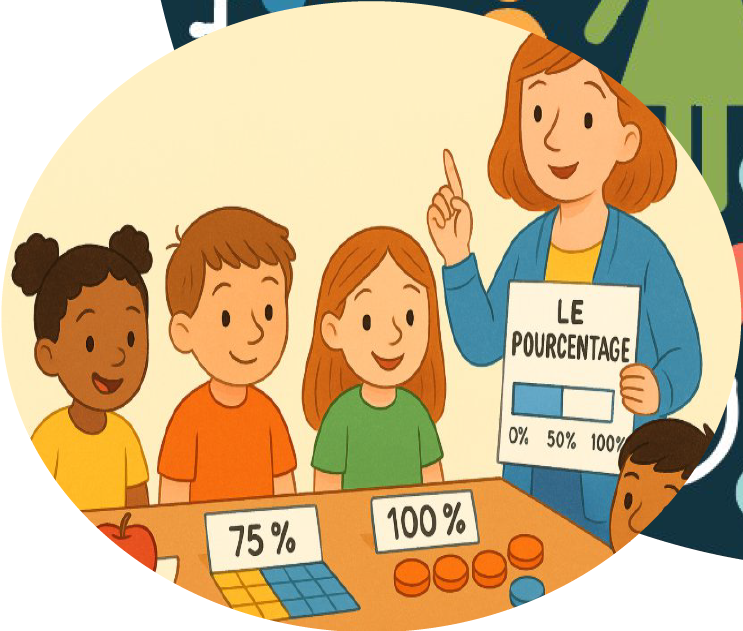
Dans cette leçon, les élèves apprennent à calculer un prix final après remise ou augmentation et à expliquer la démarche en français.
Acides et bases du quotidien utiliser le papier pH

Dans cette leçon, les élèves découvrent si des liquides du quotidien sont acides, neutres ou basiques en utilisant du papier pH. Ils apprennent à lire l’échelle de pH (0–14), à interpréter les
changements de couleur et à décrire leurs observations. L’activité leur permet de comprendre le niveau d’acidité tout en utilisant le vocabulaire scientifique et le langage pour décrire une procédure.
Comment vivent les plantes?
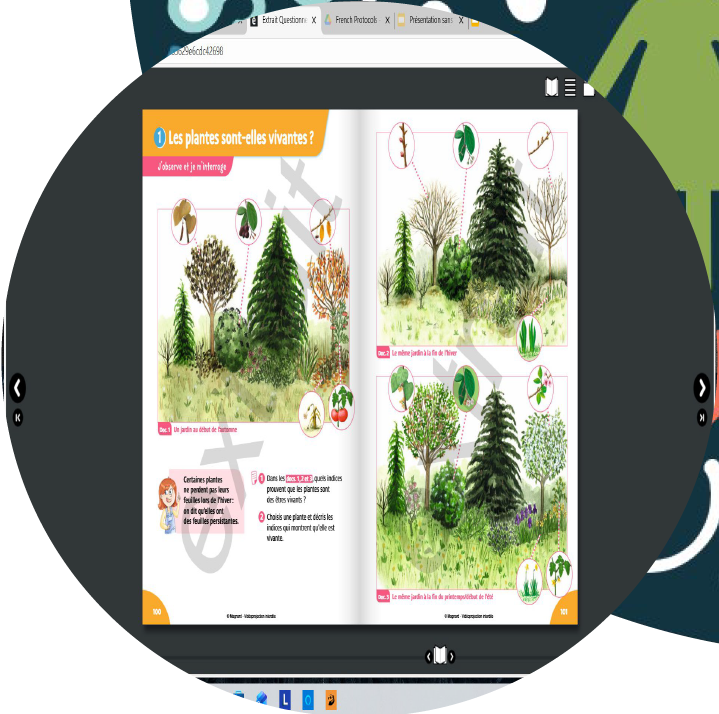
Dans cette séance les élèves vont découvrir les différentes parties d’une plante et comprendre que les plantes sont vivantes. Ils apprendront le lexique et des structures grammaticales (verbes au present) pour décrire une plante.
Sécurité à vélo

Dans cette activité les élèves vont parler de leur trajet de l’école, et notamment de la sécurité sur ce trajet. Les élèves vont aussi discuter de l’opération “A l’école en vélo” et des règles de écurité (équipements + code de la route).
Λαϊκή παράδοση
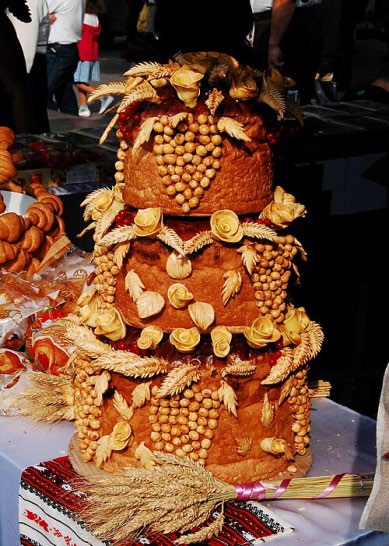
Στην παρούσα ενότητα, που συνδυάζει τη Γλώσσα με τη Μελέτη Περιβάλλοντος της Δ’ Δημοτικού, οι
μαθητές/τριες κατακτούν βασικό λεξιλόγιο για τον μύθο, τα έθιμα και τη λαϊκή τέχνη (παράδοση), ενώ
παράλληλα εξασκούνται στον σχηματισμό και χρήση του παρατατικού και τις σημασίες της μη συνοπτικής
ρηματικής όψης στο παρελθόν. Οι νέες λέξεις παρουσιάζονται στη γλώσσα-στόχο, ενώ οι μαθητές/-τριες
ενθαρρύνονται να μοιραστούν αντίστοιχες λέξεις από τη μητρική τους γλώσσα και άλλες γλώσσες που
γνωρίζουν. Με δραστηριότητες δημιουργικές και συμπεριληπτικές, αναπτύσσουν όλες τις γλωσσικές
δεξιότητες, ενώ παράλληλα συζητούν για αξίες όπως τα δικαιώματα
του παιδιού, ο σεβασμός και η ισότητα.
Δικαιώματα του παιδιού

Στην
παρούσα ενότητα, που συνδυάζει τη Γλώσσα με την Κοινωνική
και Πολιτική Αγωγή της Στ’ Δημοτικού, οι μαθητές/ τριες κατακτούν
βασικό λεξιλόγιο για τα δικαιώματα του παιδιού και παράλληλα
εξασκούνται στη χρήση της γενικής πτώσης Οι νέες λέξεις
παρουσιάζονται στη γλώσσα στόχο, ενώ οι μαθητές/ τριες
ενθαρρύνονται να μοιραστούν αντίστοιχες λέξεις από τη μητρική
τους γλώσσα και άλλες γλώσσες που γνωρίζουν Με δραστηριότητες
δημιουργικές και συμπεριληπτικές, αναπτύσσουν όλες τις γλωσσικές
δεξιότητες, ενώ παράλληλα συζητούν για αξίες όπως τα δικαιώματα
του παιδιού, ο σεβασμός και η ισότητα
Zahlen (1-10) und Körperteile
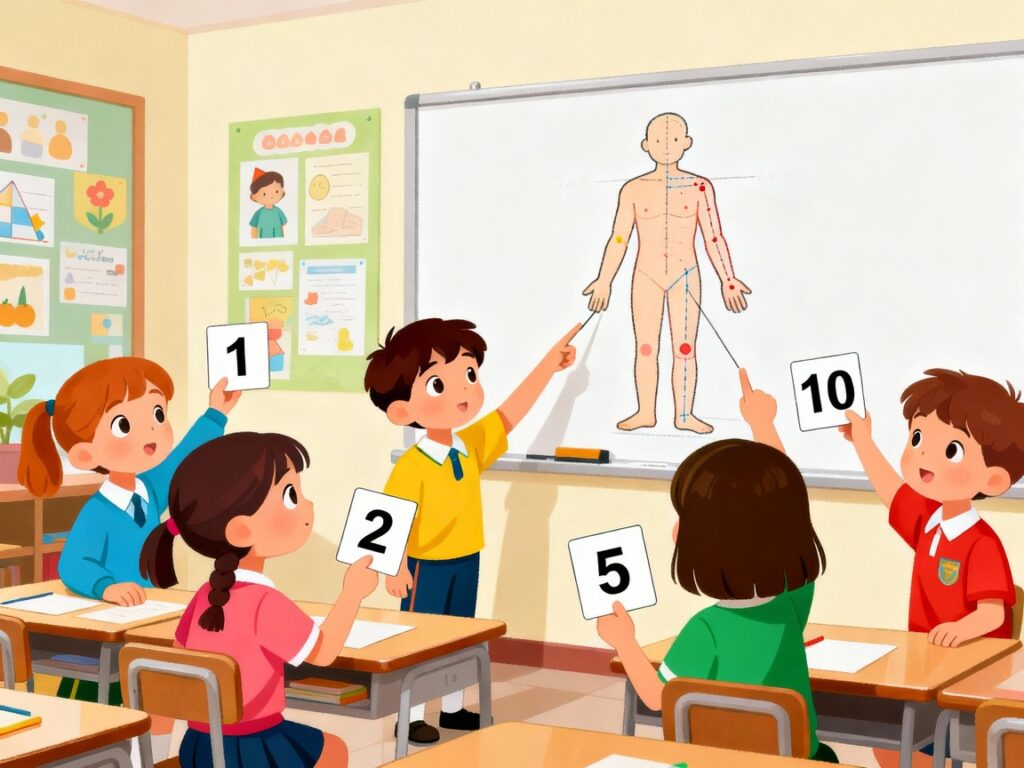
In dieser Unterrichtsstunde lernen die Schülerinnen und Schüler
wichtige Körperteile sowie die Zahlen von 1–10 kennen. Durch
visuelle Impulse (Wortschatzkarten), Bewegung und kooperative
Aktivitäten werden die neuen Begriffe eingeführt, geübt und
gefestigt. Die Lernenden verbinden Zahlen mit Körperteilen und
formulieren Sätze im Akkusativ.
Wir bewegen uns wie Tiere!
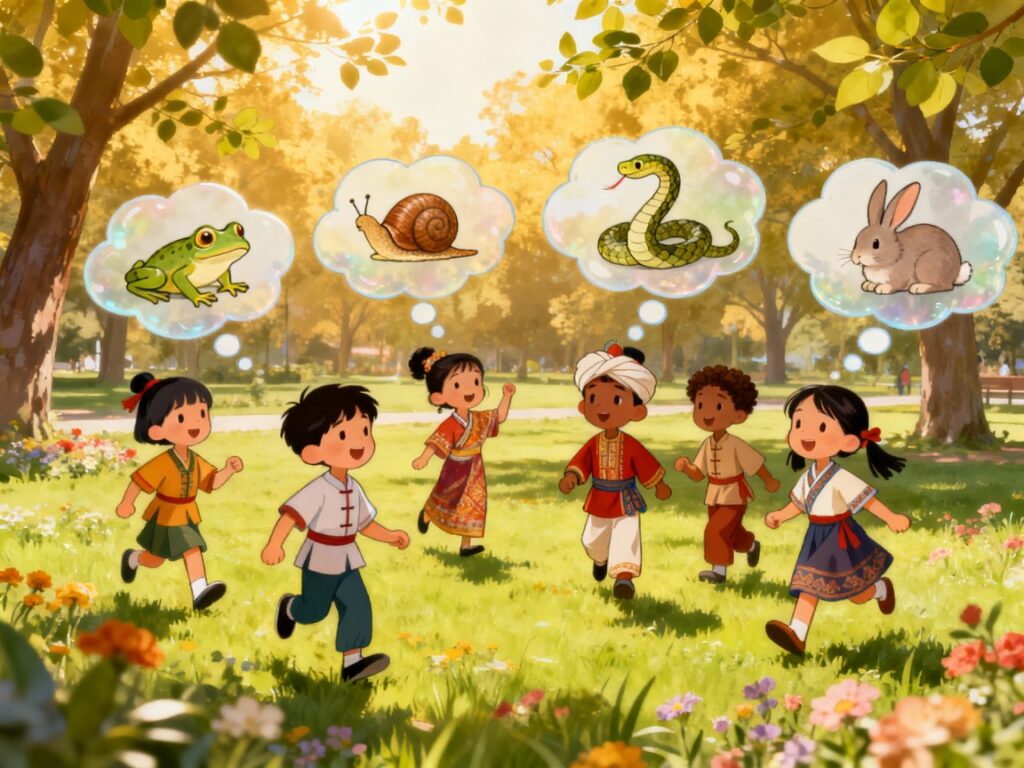
In dieser Stunde lernen die Schülerinnen und Schüler verschiedene
Tiere und deren typische Bewegungen mithilfe von Bildkarten, Gestik
und Bewegung kennen. Durch ein Begrüßungsspiel, ein Bewegungs-
Lied, die Einführung von Satzmustern („Ich bin ein … / Ich …“) sowie
zwei bewegungsreiche Spiele (Tiersafari und Tierstaffel) verknüpfen
die Lernenden Sprache mit körperlicher Aktivität. Die Stunde ist
spielerisch, multisensorisch und stark handlungsorientiert angelegt,
sodass die Schülerinnen und Schüler neue Wörter unmittelbar
erleben, imitieren und im Kontext anwenden können.
Mein Körper
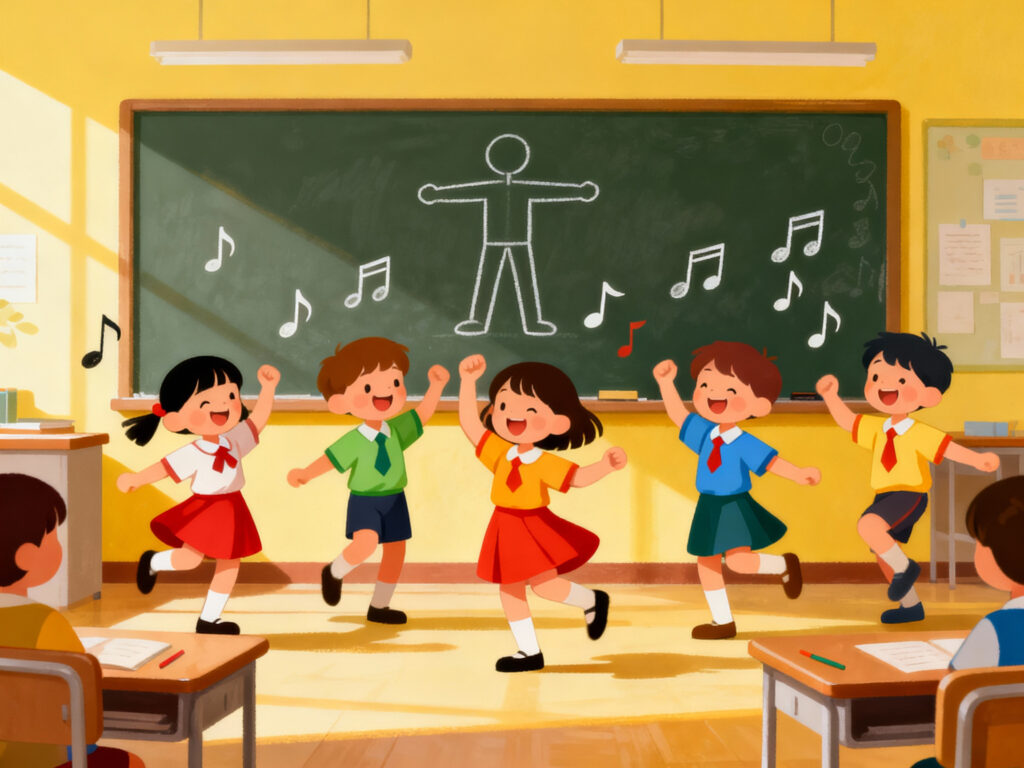
Die Unterrichtsstunde führt die Schülerinnen und Schüler spielerisch
an den Wortschatz zum Thema Körperteile heran. Durch
multisensorische Methoden (zeigen, hören, sprechen, bewegen),
kooperative Arbeitsformen und mehrsprachige Elemente entdecken
die Kinder die Bezeichnungen für Körperteile auf Deutsch und nutzen
dafür mitunter ihre Herkunftssprachen. Der Unterricht verknüpft
Spracherwerb mit Bewegung, Interaktion und kultureller Vielfalt.
Durch Lieder, Spiele und Gruppenarbeit wird der neue Wortschatz
gefestigt und aktiv angewendet.
Vom Ei zum Frosch – Der Lebenszyklus
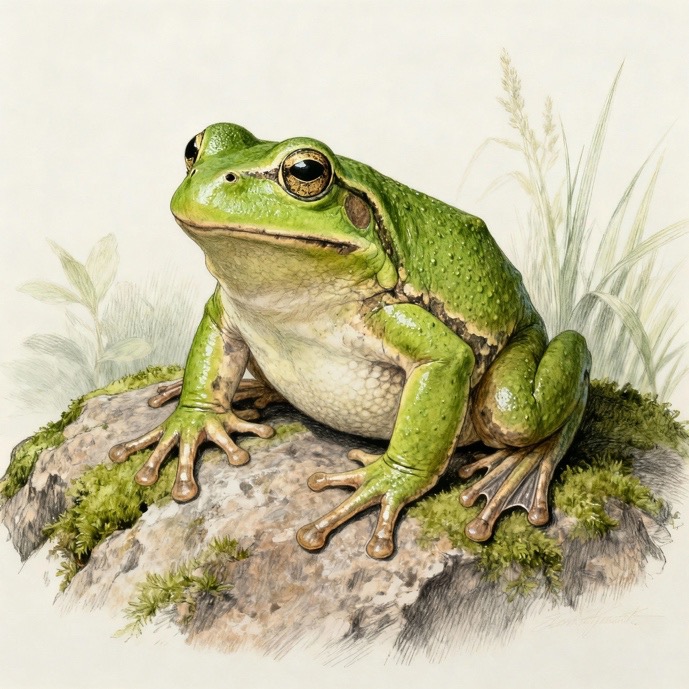
In dieser Unterrichtseinheit setzen sich die Schülerinnen und Schüler
spielerisch und sprachsensibel mit dem Lebenszyklus des Frosches
auseinander. Durch Bilder, Bewegungen, Gesten und Pantomime
erwerben sie neuen Fachwortschatz (Ei, Kaulquappe, Frosch usw.)
und wiederholen bereits bekannte Begriffe wie Körperteile des
Frosches. Die Lernenden erleben den Ablauf vom Ei bis zum
ausgewachsenen Frosch körperlich nach und festigen ihr Wissen
anschließend durch eine strukturierende Zuordnungsaufgabe. Der
Unterricht verbindet fachliches Lernen über Naturphänomene mit
sprachlicher Förderung und Bewegungsfreude.
 English (UK)
  Ελληνικά
  Polski
  Deutsch
  Français